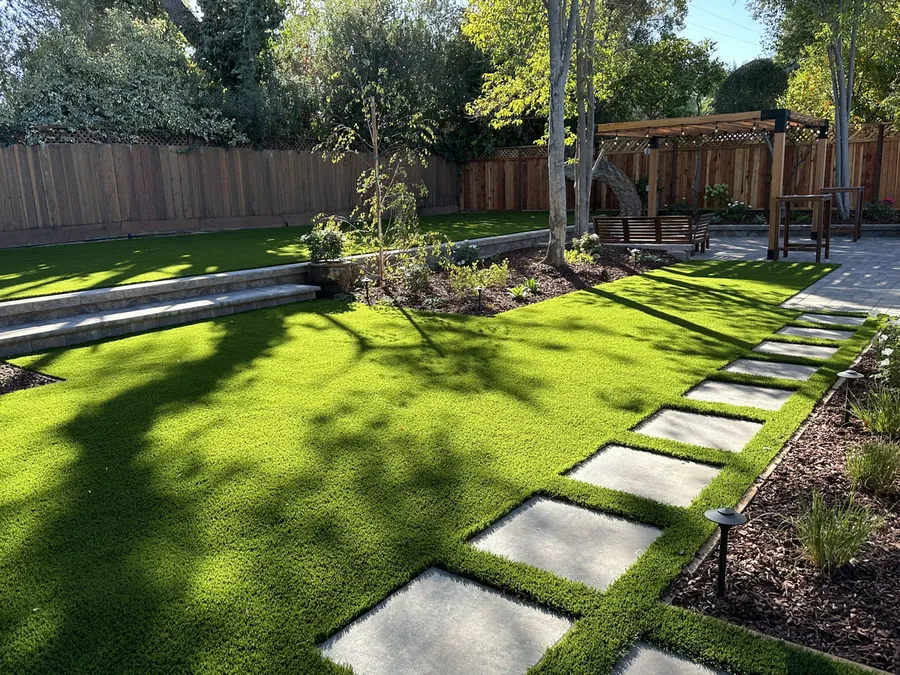
Artificial Turf vs Real Grass in Vancouver: Which Is Better? (2026)
An honest comparison of artificial turf and real sod for Lower Mainland yards, with installed cost ranges, ten-year numbers and when we recommend each.
We're Adam and Ben, and our crew installs both artificial turf and natural sod across the Lower Mainland every season. We do not have a favourite. We have a set of situations where each one is clearly the right call, and a lot of homeowners are sold the wrong one because the person quoting only installs one of them. Here is the honest version.
What each one costs installed
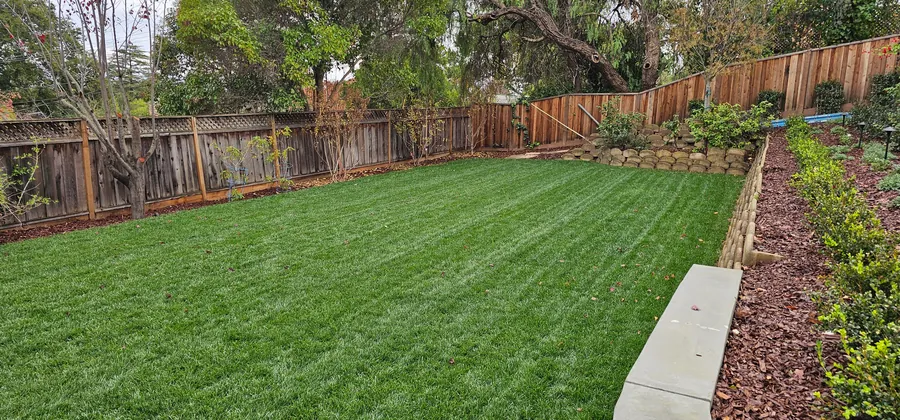
Sod installation in Greater Vancouver typically runs $2 to $5 per square foot installed. That is a typical range for our market and it covers removing the old lawn, grading, imported topsoil, the sod itself and rolling. Artificial turf typically runs $15 to $25 per square foot installed, because the product itself is expensive and the base underneath it is essentially the same excavation and compaction work we do for a patio.
So on a 1,000 sq ft backyard lawn, sod is roughly $2,000 to $5,000 and turf is roughly $15,000 to $25,000. That gap is the whole decision for most people, and the honest way to think about it is over years, not on day one.
The ten-year picture
Natural grass has ongoing costs: water through our dry summers, fertilizer, moss control, aeration, and either your time or a mowing service. In Greater Vancouver, maintaining a lawn of that size typically costs somewhere in the range of a few hundred to a couple of thousand dollars a year depending on whether you do the work yourself and whether you irrigate. Over ten years that adds up, and most lawns also need patching or a partial re-sod somewhere in that window.
Artificial turf has almost no recurring cost. You rinse it, brush it occasionally, and top up infill in high-traffic areas every few years. Quality turf carries a manufacturer warranty commonly in the 8 to 15 year range and often looks good beyond it.
Where the two lines cross depends heavily on your own maintenance habits and water use. For a homeowner who pays a service and irrigates through the summer, turf can pull even inside a decade. For someone who mows their own lawn and lets it go dormant in August, sod stays cheaper the whole way. We will not pretend there is one number that applies to everyone.
How we install artificial turf
The turf is the last hour of the job. Everything before it is what makes it look right and drain properly. We excavate roughly 4 to 6 inches, more where the ground is soft. We lay geotextile fabric over the subgrade. We import and compact a crushed base, typically 3/4-inch minus with a finer top layer, placed in lifts and compacted hard, because any softness telegraphs through the turf as a dip.
Then we screed a fine levelling layer, roll out the turf and let it relax so it lays flat, cut it to the edges, join seams with seam tape and adhesive, and secure the perimeter with spikes or a nailer board. Finally we brush in infill, usually silica sand or an antimicrobial infill for pet areas, which holds the blades upright and keeps the surface cool and stable. A weed barrier goes in as part of the layering so nothing pushes up from below.
Done properly it drains straight through and away. Done on a thin or uncompacted base, it ripples, holds water and looks like a rug in a yard. This is the single biggest quality difference between turf installers.
Pets and kids
Turf is very good for dogs. It does not develop mud pits or bare patches along the fence line, urine drains through with the right infill, and solids are picked up and the area rinsed. It is the reason a large share of our turf jobs happen. The caveat is heat: on the handful of genuinely hot days we get, turf in full sun gets much warmer than grass, and a rinse cools it quickly.
For kids, turf gives you a surface that is usable in February instead of a mud bath, which in our climate is a real quality-of-life difference. Under play structures we add a shock pad where there is a fall height to consider. Real grass is softer and cooler, but in a small, shady Lower Mainland backyard it often cannot survive concentrated play traffic no matter how well it is installed.
What we see on Surrey, Langley and White Rock jobs
The pattern is consistent. Small, fenced backyards that are shaded by a neighbour's cedars or the house itself are where sod struggles most: not enough light, constant moisture, moss taking over by the second winter. Those yards are our most common turf installs, and homeowners are usually happier for it.
Open front lawns with good sun are the reverse. Sod does well there, costs a fraction, and looks natural against the street. We regularly talk homeowners out of turfing a big sunny front yard because the money is better spent elsewhere.
The third pattern is the dog yard. Side yards and small back yards with one or two active dogs are almost always turf conversions, and it is usually the drainage under the turf, not the turf itself, that we spend the estimate talking about.
When we recommend sod instead
When the area is large and sunny, when the budget is better spent on hardscape or drainage, when you actually enjoy a natural lawn, when the yard is a growing space with beds and trees where a living surface fits the design, and when you are preparing to sell and want the best appearance per dollar. Sod also goes in fast and the yard is transformed the same day.
We recommend turf when the yard is small, shaded, sloped, heavily used by dogs or kids, or when a homeowner has already replaced a failing lawn once and does not want to do it again.
Drainage decides both
Whichever surface you choose, the ground under it is what determines whether you are happy in five years. On clay-heavy lots we frequently add a drain line or correct grades before installing either product. A lawn that sits in water will not thrive and turf on a soggy base will settle. This is the part of the estimate we spend the most time on.
Everything we install, sod or turf, is backed by our 1-year workmanship warranty, so if something we built settles, shifts or fails within a year, we come back and fix it.
If you are weighing the two, we will come out, look at your light, your soil and your drainage, and tell you which one we would put in if it were our own yard. The visit is free and you will have an itemized written quote within 24 hours.
Ready to Transform Your Outdoor Space?
Get a free estimate from Northwood Landscaping — serving Vancouver, Burnaby, Surrey, Coquitlam & Greater Vancouver.